
30-day priority map
Know which pages, topics and fixes should move first.
SEO & AI Search
Your buyers are searching long before they book a call. We help you build the service pages, content clusters, FAQs and internal links that make your brand easier to find when they compare options, ask questions and look for proof.
30-day priority map
Know which pages, topics and fixes should move first.
1 to 3 revenue pages improved
Start with the pages closest to demos, calls or enquiries.
Search and answer coverage
Build pages for keywords, buyer questions and comparison searches.
Starts from $1,499 for a focused SEO/GEO Visibility Sprint.
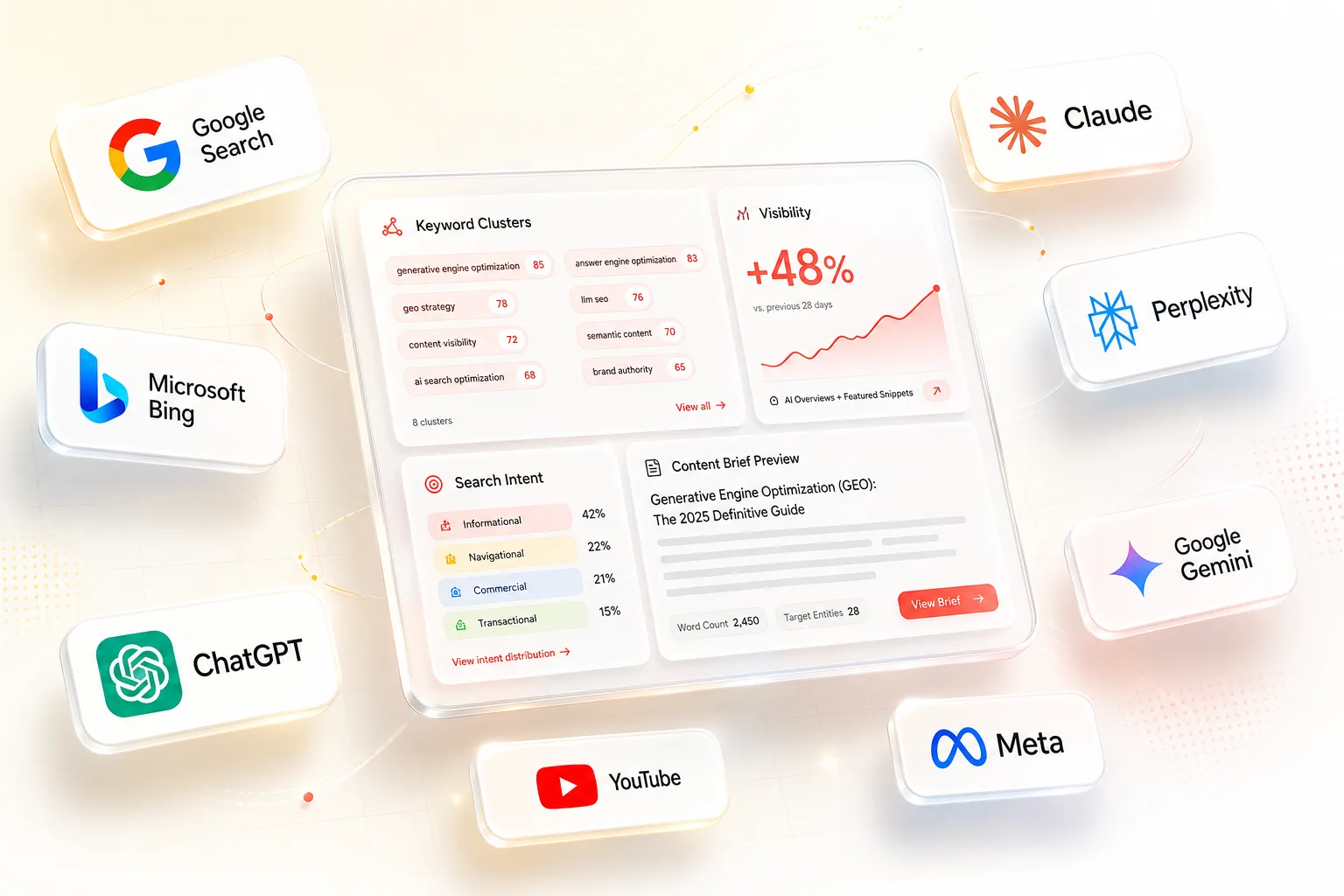
The search gap
Most SEO work gets stuck in low-intent blogs. The money is usually closer to service pages, comparison searches, pricing questions, FAQs, internal links and content that answers what buyers ask before they speak to sales.
Your content gets visits but does not guide readers to a clear service, offer or CTA.
Service pages miss use cases, FAQs, proof, pricing context and search-friendly structure.
They rank for "best", "cost", "vs", "alternatives" and problem-aware searches first.
Important answers live across calls, emails and decks instead of your website.
Use this page as the main SEO authority page. Each sub-service page targets a sharper buyer intent and links back to the main service.
Structure pages and FAQs so buyers can discover your brand in question-led search journeys.
Make your offer easier to understand across answer-led discovery with clearer page context.
Plan content around buyer intent, service priority, competitor gaps and revenue pages.
Upgrade high-intent service pages with stronger sections, metadata, FAQs and internal links.
Connect pillar pages, blogs, FAQs and service pages around one search theme.
Create blogs that answer real buyer questions and lead readers toward the right service.
Turn objections, comparisons and buying questions into clear FAQ blocks.
Fix metadata, indexation, headings and page structure issues that hold visibility back.
What you get
We map what buyers search, what competitors own and which pages can create the fastest clarity. Then we turn that into page direction, clusters, FAQs, metadata and internal links.
Buyer-intent keywords, comparison terms, question searches and priority pages.
Pillars, blogs, FAQs and internal links grouped by search theme.
H1, H2, metadata, sections, proof, CTA and FAQ direction.
Clear answers to the questions buyers ask before they trust you.
Links between blogs, services, case studies, tools and conversion pages.
What to fix, write, publish and link next.
Pricing
Start with a focused SEO/GEO sprint, build a complete search growth system, or let us run the visibility engine every month.
All pricing is starting pricing. Final scope depends on page count, research depth, number of assets, turnaround expectations, revisions, technical complexity and whether you need strategy only, execution only or both.
How it works
Share your site, services and competitors. We map demand, choose priority pages and deliver the search system your team can execute.
Five steps
Live task preview
Active step · We choose the priority pages
B2B service SEO content cluster
Goal: rank for buyer-intent keywords and improve answer visibility.
AI research layer
Keywords, intent mapping & brief drafts
Human marketer review
GEO answers, structure & publish handoff
You share the site and goals. We turn them into a search system.
Clear keywords, page direction, FAQ blocks, internal links and a practical roadmap your team can execute.
FAQs
Yes. That is often the fastest win because service pages are closer to buying intent than blogs.
Both are possible. The sprint can include briefs. Larger or monthly scopes can include publish-ready drafts.
No. The same structure also helps buyers and answer-led search tools understand your offer faster.
Start with 1 to 3 pages closest to revenue: homepage, main service page, pricing page or landing page.
Send your website, target services and competitors. We will show you which pages to fix first, what to build next and how to connect search traffic to revenue.